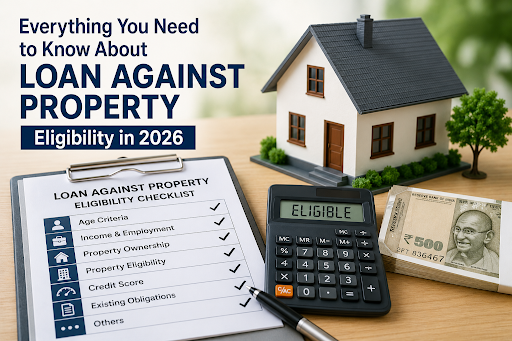
A Loan Against Property is a safe loan that permits property owners to borrow money by mortgaging a residential or commercial property with a lender. The loan against property provides financial stability by leveraging property as collateral. To qualify, applicants should review the eligibility for loan against property carefully. Unlike a home loan, where the funds are generally used to purchase a property, a loan against property can be used for several financial needs, subject to the lender’s terms. Firstly, the eligibility criteria include being an Indian citizen residing in India. The minimum age to apply for the loan is 21 years. It’s vital for people to adhere to the conventions and standards of loan application.
What Is Loan Against Property Eligibility?
Loan against property eligibility refers to the conditions which can applicant must fulfill to be able to be sanctioned a loan. The exact criteria vary between banks and financial institutions, so there is no single eligibility standard applicable to every borrower. It is important for lenders to abide by the age limit, nationality rules, lay importance on the credit history and ensure financial stability. A CIBIL score of 650 and above is needed for people who want to be eligible for applying for a loan against property.
Eligibility Requisites for Applying for Loan Against Property
The eligibility requirements for contenders to apply for a loan against property involve abiding by the nationality requirements, age bar and credit score availability.
1] Age and Citizenship Requirements:
Age is one of the first factors which affects eligibility for a person to take a loan against property. The minimum age is 21 years and maximum age is 85 years for loan eligibility. It also specifies that non-financial property owners may have different age provisions. Age of the individual applicant or co applicant is needed at the time of maturity. Higher age of applicant should be considered up to 95 years.Applicants must also be Indian citizens residing in India and have property in a city where the lender operates. Since age limits differ among lenders, applicants should check the latest criteria before applying. A CIBIL score of 650 or above is needed to get a loan approved against property. Salaried or self employed individuals are eligible to apply.
2] Documents Needed for Loan Against Property:
The eligibility for loan against property requires proof of identity and residence. Aadhaar card, passport, voter ID, driving license or NREGA job card is required to be met easily. A proof of identity or residence is needed to be showcased with property related documents. A proof of business for self employed applicants and bank statements is very important to be shown. Beneficial details of the owner and KYC details are needed.
3] Credit Score and Worthiness:
Your credit score is another important part of loan against property eligibility in 2026. A sound and valid credit history helps in responsible borrowing and understanding of capacity. Bajaj Finance states that a CIBIL Score of 650 or higher is preferable for its LAP product, although individual lenders may follow different credit-score policies. A higher score does not guarantee approval because lenders also consider income, existing debt, property value and other factors. Before applying, borrowers should review their credit report, pay outstanding dues on time and avoid taking on unnecessary new debt.
4] Property Value and Legal Status:
Since bajaj housing finance limited home loan loan against property is a secured loan, the property which is pledged offers guarantee for financial stability and repayment worth. Lenders might accept residential or commercial properties depending on the company policies. The property generally needs to have clear ownership and much ascertained documentation. Lenders can also conduct legal and technical assessments to establish the property’s value and suitability as security. Bajaj Finance notes that property-related documents form part of the application process.
Conclusion
Understanding eligibility for loan against property is important for applying in 2026. Meeting the prime essentials of eligibility, age bar, citizenship and credit worthiness are very important to understand the legal status of property. Meeting the basic criteria does not automatically guarantee approval, as the lender conducts its own credit, legal and property assessments. Prospective borrowers should therefore compare current lender policies, organise their documents and assess their repayment capacity carefully before pledging their property.