Overview
Public demonstrations and collective gatherings have long served as a fundamental cornerstone of democratic engagement across major urban centers.
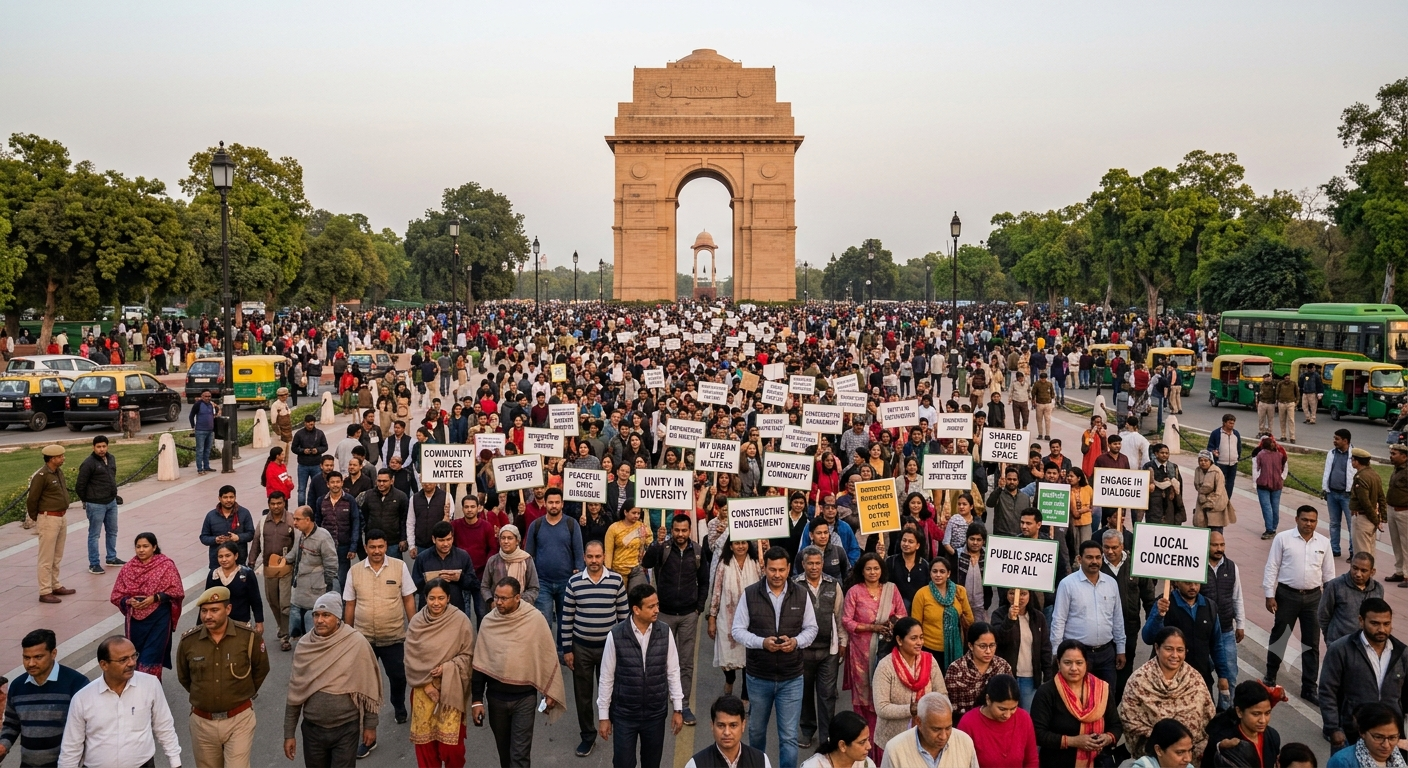
In India’s national capital, Delhi protests frequently emerge as a primary avenue through which civil society groups, political organizations, labor unions, student bodies, and community representatives express concerns.
Given the city’s unique position as the seat of national governance, political demonstrations in Delhi naturally draw widespread attention from national news outlets, policy analysts, international observers, and the general public.
Understanding the underlying dynamics, socio-economic context, and broader societal implications of these peaceful demonstrations requires a nuanced look at how public dissent manifests in modern urban spaces.
Historical Background
Delhi’s transformation into a major hub for civic engagement is deeply intertwined with India’s democratic history over past decades.
Key public venues across the capital—such as Jantar Mantar, Ramlila Maidan, and the India Gate lawns—have historically hosted pivotal public rallies, civil rights campaigns, and socio-economic movements.
These central locations provide a platform where citizens gather to draw the direct attention of lawmakers and administration officials.
Over the years, public rallies and social justice movements in Delhi have addressed a wide array of topics, ranging from educational reforms and agricultural policies to consumer rights, environmental protection, and public safety regulations.
The tradition of peaceful assembly continues to be recognized as a vital mechanism for ensuring executive accountability and giving voice to grassroots perspectives.
Key Drivers
While specific demands vary depending on the organizing bodies and targeted institutions, contemporary social movements in the capital generally focus on structural, economic, and policy-related matters.
A significant portion of public gatherings revolves around economic stability, employment opportunities, labor rights, and fair compensation for workforce sectors.
Student groups and academic associations frequently organize peaceful rallies to advocate for accessible higher education, equitable examination standards, and enhanced campus infrastructure.
Additionally, environmental activist groups in Delhi have increasingly taken to public spaces to highlight critical ecological concerns, such as seasonal air pollution, urban waste management, and sustainable city planning.
By bringing these multifaceted issues into the public discourse, civic demonstrations highlight the ongoing dialogue between citizens and governing bodies.
Daily Life & Traffic
One of the most immediate and visible aspects of large-scale civic gatherings in the national capital is their influence on urban infrastructure, daily transportation, and local business operations.
Major political rallies and organized marches often require coordinated traffic diversions by law enforcement agencies to maintain public safety and prevent congestion along primary arteries like Ring Road and Central Secretariat routes.
While traffic management protocols help mitigate disruptions, commuters routinely experience delays during peak hours when major arterial roads are cordoned off.
Local commercial establishments situated near popular protest sites also navigate shifting foot traffic patterns, balancing civic participation with daily business operations.
City authorities and traffic police routinely issue transit advisories to help residents plan alternative commuting routes during scheduled public assemblies.
Role of Digital Media
In the modern digital age, the structure and speed of public mobilization in Delhi have undergone significant transformations.
Social media platforms, instant messaging networks, and online news portals play a decisive role in shaping awareness, coordinating logistics, and disseminating information regarding peaceful demonstrations.
Activists and advocacy organizations utilize digital tools to share educational resources, outline campaign objectives, and broadcast live streams of events to wider audiences across the country.
Furthermore, media reporting ensures that local civic events gain national visibility, encouraging broader public debate on pressing legislative and social topics.
Digital communication has effectively expanded the reach of civic activism beyond physical locations, allowing citizens across different regions to engage with discussions taking place in the nation’s capital.
Legal Framework
Navigating public gatherings in a major metropolitan area requires a delicate balance between safeguarding fundamental rights to peaceful assembly and ensuring public order, safety, and smooth administrative operations.
Legal frameworks in India guarantee citizens the right to freedom of speech and peaceful assembly, subject to reasonable restrictions imposed in the interest of public order and national security.
Municipal authorities, administrative courts, and police departments continuously work to establish designated protest zones where citizens can assemble safely without causing severe disruption to essential public services or emergency transport routes.
Ongoing discussions among legal experts, policymakers, and civil society leaders frequently explore methods to refine administrative guidelines.
This balance ensures that public expression remains protected while maintaining municipal functionality and citizen safety.
Final Thoughts
Delhi protests continue to represent an integral element of the country’s broader democratic fabric, reflecting the diverse perspectives, aspirations, and concerns of its populace.
As the national capital continues to grow as an economic and political center, the avenues for social dialogue, policy negotiation, and peaceful mobilization will undoubtedly continue to evolve.
Whether addressing socio-economic reforms, environmental sustainability, or institutional accountability, public demonstrations remain a powerful testament to active citizenship and public participation in governance.
As city administrators and public groups adapt to changing communication channels and urban needs, maintaining constructive, peaceful channels for civic dialogue will remain vital for the continued development of a responsive and inclusive society.
Check out more blogs at Webku.in