Medically Written By: Dr. Nishtha Patel, MBBS, MD in Dermatology, Medical Head & Consultant, Kosmoderma Skin, Hair, and Body Clinics
You want clearer, smoother skin. Then you open a clinic menu, and every concern seems to have a laser attached. Is laser treatment for face really the answer to everything?
It is easy to feel confused. Choosing the wrong treatment can cost money and, on Indian skin, can leave dark marks. That worry is completely valid.
The reassuring truth is that lasers work well for some concerns but are not ideal for others. Here is what modern dermatology says about when to choose a laser and when an alternative works better.
What Laser Treatment for the Face Really Means
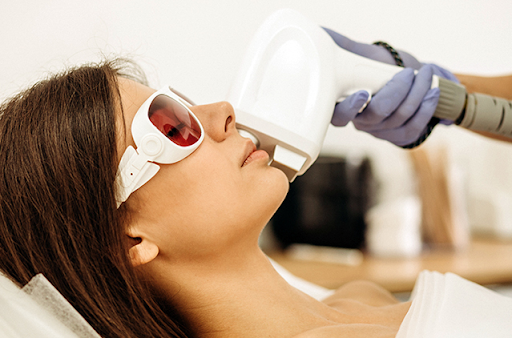
A laser sends focused light of one wavelength (one specific color of light) into the skin. Different targets, such as melanin (skin pigment), blood vessels, or water in skin tissue, absorb different wavelengths. The absorbed light turns into heat, and the heat does the work.
This is why there is no single “face laser.” Each device suits certain concerns. Indian skin (Fitzpatrick types III to VI, a scale that classifies skin by its response to sun) holds more melanin, so settings matter. The American Academy of Dermatology (AAD) notes that darker skin is more prone to burns and dark marks after laser treatments, so a dermatologist experienced with darker skin is essential.
Facial Concerns Laser Treatments Can Address
- Sunspots and uneven tone: Pigment-targeting lasers, such as Q-switched Nd: YAG and pico lasers, break pigment into tiny particles that the body clears gradually.
- Acne scars and rough texture: Fractional lasers create tiny, controlled injuries (micro-injuries) that stimulate collagen, the protein that keeps skin firm and smooth.
- Redness and broken blood vessels: The AAD notes that lasers can reduce rosacea-related redness and broken blood vessels, though several treatments are often needed.
- Fine lines and early sun damage: Resurfacing lasers can improve skin texture and visible signs of aging.
- Unwanted facial hair: Diode lasers target pigment in the hair. The AAD notes that this works best when there is contrast between skin and hair color.
- Melasma: Melasma is patchy pigmentation linked to hormones and sun. Low-energy laser toning may help under careful supervision, and results can fade without sun protection.
A dermatologist can match the right device to your concern, and dermatologist-guided facial laser treatments are planned around your skin type and downtime.
When Alternatives May Be Better
A laser is not always the first or best step. Sometimes a gentler or different approach suits your skin more.
- Mild post-acne marks: A published review describes lasers for post-inflammatory hyperpigmentation, or PIH (dark marks after skin injury), as a second-line option after topical agents in skin of color. Response varies, and complications can occur.
- Active acne: Medical acne treatment should control breakouts first. Scar-focused lasers come later.
- Dullness and clogged pores: Chemical peels and medical facials, such as HydraFacial MD, exfoliate the surface without laser heat.
- Rolling or boxcar acne scars: A review of procedures in skin of color reports that microneedling has a favorable safety profile for post-acne scarring, and it can be repeated at intervals. Radiofrequency microneedling (MNRF) is another option.
- Deep expression lines: Botulinum toxin (Botox) relaxes the muscles that cause these lines. Lasers do not do this.
- Volume loss: Hyaluronic acid fillers restore volume. Lasers resurface skin but do not add volume.
- Skin laxity: HIFU (high-intensity focused ultrasound) tightens deeper layers, while surface lasers mainly improve texture.
According to Dr. Chytra V. Anand, Founder of Kosmoderma Skin, Hair, and Body Clinics, “A laser is a powerful tool, but it is only one tool. The right treatment is the one that suits your concern, your skin type, and your lifestyle.”
Who Should Wait or Avoid Laser Treatment
- Pregnancy: Most clinics defer laser treatment until after delivery as a precaution.
- Active infection: Cold sores, boils, or inflamed acne in the area need to settle first.
- Recent tan or sunburn: Treating tanned skin raises the risk of burns and dark marks.
- Keloid tendency: Tell your doctor if you scar thickly.
- Medicines: Share every medicine you take, including those that make skin sun-sensitive.
Choosing a Skin Care Clinic in Bangalore
It is natural to feel unsure about where to go. A few clear checks can replace guesswork with confidence. When you visit a skin care clinic in Bangalore, look for these signs:
- A dermatologist-led assessment: Your skin should be examined before any laser is suggested.
- Experience with Indian skin: Ask how often the team treats Fitzpatrick types III to VI.
- Approved technology: Ask whether the device is US FDA-cleared or approved for that purpose.
- A plan with alternatives: A good clinic explains when a peel, microneedling, or medical treatment is the better choice.
- Clear expectations: Ask about the number of sessions, downtime, risks, and aftercare.
- A patch test: A test spot is a sensible step before treating the full face.
Bangalore’s mild weather can hide strong UV exposure, and city air pollution can irritate skin. Daily sunscreen matters before and after any treatment.
Aftercare Basics
- Protect from the sun: Apply a broad-spectrum sunscreen of SPF 30 or higher every day.
- Be gentle: Skip scrubs and do not pick at peeling skin.
- Avoid heat: Stay away from saunas and very hot showers for a few days.
Conclusion
Lasers can visibly improve pigment, scars, redness, and unwanted hair. They are not the answer to every concern, and sometimes a peel, microneedling, injectables, or medical care is the better first step. The best plan starts with a proper skin assessment.
If you are unsure which route suits you, an examination by a qualified dermatologist at a trusted skin care clinic in Bangalore can save you time, money, and frustration. Healthy skin is a journey that goes beyond the surface.
About the Author: Dr. Nishtha Patel, MBBS, MD in Dermatology, is a dermatologist and the medical head & consultant of Kosmoderma Skin, Hair & Body Clinics. To learn more about the clinic’s approach to pigmentation concerns, visit Kosmoderma.
DISCLAIMER: This article is for educational purposes only and is not a substitute for professional medical advice, diagnosis, or treatment. Always consult a qualified dermatologist before starting any treatment. Results vary from person to person.