Businesses use multiple payment providers to accept transactions across different channels and markets. Managing these services efficiently helps keep payment operations smooth and customer experiences consistent. As transaction volumes grow, businesses need simpler ways to coordinate payment activities across providers.
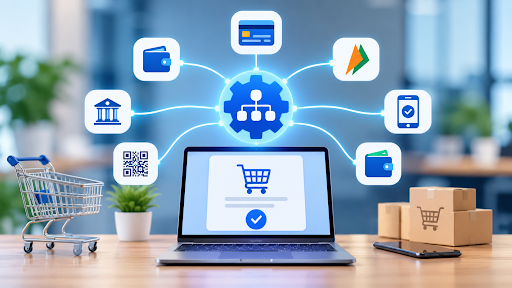
Payment orchestration brings multiple payment services together through a single platform. It helps businesses manage transaction routing, monitor payment activity, and support different payment options. This approach simplifies payment operations while allowing businesses to adapt to changing requirements.
How Does Payment Orchestration Work?
A payment orchestration platform connects businesses with multiple payment gateways and payment service providers. When customers initiate transactions, the platform evaluates payment requests and selects suitable providers using predefined routing rules based on specific transaction details and business preferences.
These rules can consider payment methods, transaction values, processing costs, and provider performance. The platform then sends each payment request through the selected gateway. Businesses can adjust routing preferences over time based on transaction patterns, customer needs, and operational goals.
How Does It Simplify Payment Management?
Businesses can manage daily payment operations more efficiently through several capabilities, such as:
- Fewer Integrations: A single platform connection provides access to supported payment providers, simplifying technical setup and ongoing maintenance.
- Automated Transaction Routing: Predefined rules route transactions to the best providers based on payment requirements, processing costs, and performance.
- Centralized Provider Control: Teams can manage supported provider connections, routing preferences, and payment configurations through one interface.
- Reduced Administrative Effort: Automated workflows simplify routine payment tasks and help teams maintain consistent transaction handling across different channels.
These features help businesses coordinate payment activities efficiently while giving teams greater control over daily operations.
How Does It Reduce Payment Failures and Service Disruptions?
Payment orchestration platforms can monitor gateway availability and direct eligible transactions through alternative providers. When a gateway has technical issues, automated failover can select another available route, helping businesses maintain payment continuity and support a smoother checkout experience.
Some platforms also support controlled retries for recoverable payment failures. These mechanisms consider transaction status and provider responses before another attempt. Businesses can use performance information to refine routing decisions and improve payment completion rates across supported transaction types.
How Does It Make Payment Tracking and Reconciliation Easier?
Centralized dashboards allow businesses to monitor transactions handled by different payment providers. Teams can review payment statuses, authorization outcomes, and gateway performance from one interface. This visibility helps businesses understand transaction patterns and make informed decisions about payment operations.
Platforms offering reconciliation features or compatible reporting integrations can also support financial record management. Finance teams can compare transaction information with settlement reports, review payment differences, and track completed transactions. These capabilities make routine financial oversight easier.
How Does It Simplify Adding New Payment Methods and Providers?
Businesses can introduce additional payment methods through supported integrations as customer preferences evolve. Payment orchestration allows teams to connect compatible providers while maintaining a consistent payment setup. This flexibility supports payment expansion across different customer segments and business channels.
For businesses entering new markets, access to regional payment providers can simplify expansion. Teams can choose payment options that match local preferences, provider availability, and applicable requirements. This approach helps businesses serve customers across different locations more efficiently.
Conclusion
Efficient online payment processing involves coordinating payment providers, managing transaction flows, and maintaining clear visibility into daily activities. Orchestration platforms bring these functions together, helping businesses simplify payment management while supporting reliable transaction handling across multiple payment channels and providers.
Businesses can also benefit from easier provider management, improved payment continuity, and greater flexibility when introducing additional payment options. Evaluating platform compatibility, routing capabilities, and reporting features can help organizations select solutions that meet their operational needs and support future growth.