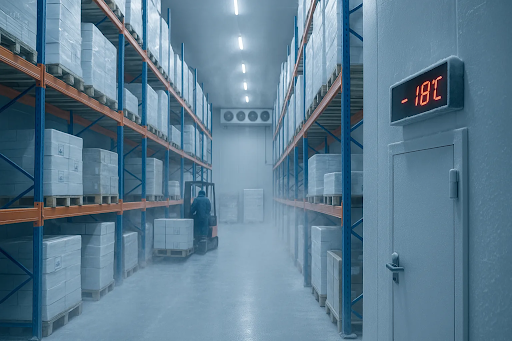
Proper cold storage inventory management allows businesses to control temperature, humidity, and real-time tracking, extending product shelf life, cutting spoilage losses, maintaining product quality, and ensuring strict regulatory compliance across the entire supply chain. By integrating smart climate controls with automated tracking systems, companies eliminate operational bottlenecks, streamline seasonal demand fluctuations, safeguard sensitive goods from thermal shock, and protect bottom-line profits against avoidable inventory shrinkage.
In this comprehensive guide, you will explore core operational mechanisms, technologies, key benefits, best practices, and industrial use cases of temperature-controlled warehousing.
What is Cold Storage Inventory Management?
Cold storage inventory management encompasses the systematic tracking, handling, and preservation of temperature-sensitive goods within climate-controlled facilities. Unlike ambient warehousing, cold chain storage requires continuous environmental monitoring to prevent thermal degradation.
Core Operational Components
- Thermal Zoning: Creating distinct temperature ranges (frozen, chilled, ambient, deep-freeze) tailored to specific commodity requirements.
- Environmental Monitoring: Utilizing IoT-enabled sensors to log continuous temperature and humidity readings.
- Traceability Protocols: Implementing barcode systems and RFID tagging to monitor product movement from intake to final distribution.
- Batch and Lot Management: Grouping products by production dates, expiration windows, and origin batches to facilitate systematic stock rotation.
Key Technical Specifications for Temperature Zones
Managing perishable items requires precise temperature controls tailored to specific product categories:
| Storage Category | Temperature Range | Humidity Level | Primary Product Applications |
| Deep Freeze | -25°C to -30°C | Low (< 50%) | Ice cream, specialized bio-pharmaceuticals, seafood |
| Frozen | -18°C to -22°C | Low (50% – 60%) | Frozen meats, poultry, pre-packaged meals, ice |
| Chilled | 2°C to 8°C | Medium (65% – 75%) | Dairy, fresh meats, vaccines, pharmaceuticals |
| Cool / Controlled | 8°C to 15°C | High (80% – 90%) | Fresh fruits, vegetables, flowers, confectionery |
How Climate Control Systems Prevent Product Loss
Perishable products degrade through microbial growth, enzymatic breakdown, and moisture loss. Maintaining precise climate controls mitigates these factors effectively.
1. Microbiological Suppression
Lowering temperatures slows down metabolic processes in organic matter and stops pathogen proliferation.
- Pathogen Control: Keeps bacteria like Listeria and Salmonella dormant.
- Quality Retention: Retains nutritional value, texture, and visual freshness.
2. Humidity & Atmospheric Control
Excess moisture causes mold and package degradation, while air dryness leads to dehydration and weight loss in fresh produce.
- Relative Humidity Management: Prevents surface condensation on chilled packaging.
- Controlled Atmosphere (CA): Adjusts oxygen, nitrogen, and carbon dioxide levels to slow down ripening in fresh produce.
Critical Inventory Methodologies for Perishables
Managing perishable goods requires inventory strategies that prioritize expiration dates over standard arrival sequences.
First-Expired, First-Out (FEFO)
The FEFO methodology ensures that items closest to their expiration date are shipped first, regardless of when they arrived at the warehouse.
- Reduces Spoilage: Minimizes stock write-offs due to expired shelf life.
- Protects Brand Integrity: Guarantees end consumers receive fresh, high-quality items.
- Optimizes Picking Routes: Warehouse Management Systems (WMS) direct pickers directly to early-expiring lots.
First-In, First-Out (FIFO)
Used primarily when products have uniform, long-term stability under frozen conditions.
- Maintains predictable batch aging.
- Simplifies standard stock turnover routines.
Core Advantages of Modern Cold Chain Storage
Adopting advanced climate-controlled warehouse strategies delivers direct operational and financial advantages:
1. Financial Loss Reduction
- Decreases spoiled inventory and damaged goods.
- Maximizes sell-through rates by maintaining product quality throughout storage.
2. Operational Compliance & Traceability
- Meets food safety guidelines (e.g., HACCP, FSSAI, FDA) and pharmaceutical distribution standards (GDP).
- Maintains digital log histories for regulatory compliance audits and quick, targeted batch recalls.
3. Scalable Distribution Capabilities
- Allows businesses to expand geographic coverage without compromising product safety.
- Supports e-commerce storage demands for direct-to-consumer perishable logistics.
Essential Technology Integration in Cold Storage
Modern facilities rely on digital tracking tools and automation to streamline operations and remove manual oversight errors.
Internet of Things (IoT) & Sensor Networks
- Real-Time Data Transmission: Wirelessly transmits atmospheric metrics every few seconds.
- Instant Risk Alerts: Triggers immediate SMS or email notifications to facility managers if temperatures drift out of spec.
Warehouse Management Systems (WMS)
- Automated Slotting: Directs inventory to optimal temperature zones based on product profiles.
- Automated Expiry Tracking: Logs batch numbers, shelf life limits, and harvest dates automatically upon arrival.
Industry-Specific Applications
Different market sectors utilize climate-controlled facilities for distinct operational requirements:
Food & Beverage Industry
- Meat & Poultry: Demands strict frozen-zone stability to prevent freezer burn and microbial growth.
- Dairy Products: Needs constant chilled environments to prevent souring and separation.
- Produce: Requires precise humidity controls to maintain cellular structure and crispness.
Healthcare & Pharmaceuticals
- Vaccines & Biologics: Requires strict cold chain integrity within narrow thermal bands (typically 2°C to 8°C).
- Chemical Reagents: Needs explosion-proof, temperature-stable storage environments.
Specialty E-Commerce
- Direct-to-Consumer Foods: Relies on fast, climate-controlled fulfillment centers for quick order picking, packing, and dispatch.
Best Practices for Cold Inventory Management
Maintaining a reliable cold storage process requires strict operational hygiene, scheduled maintenance, and clear staff workflows.
Conduct Thermal Mapping Regularly
- Identify potential hot spots or air circulation blockages within racking structures.
- Calibrate sensors routinely against certified reference devices.
Establish Strict Dock Management Protocols
- Minimize the time, product spends in unconditioned loading bays during staging.
- Utilize dock seals, shelter enclosures, and rapid-roll freezer doors to limit temperature spikes.
Train Personnel on Cold Chain Integrity
- Educate staff on proper stacking methods to keep air vents unobstructed.
- Mandate immediate reporting procedures for temperature fluctuations or system alerts.
Maintain Preventive Equipment Schedules
- Service compressors, condensers, and backup generators ahead of peak operational seasons.
- Inspect door gaskets and insulation panels for thermal leaks.
Final Thoughts
Managing specialized climate setups requires robust infrastructure, continuous power guarantees, advanced monitoring, and operational flexibility. Working with experienced storage providers enables businesses to secure high-performance logistics capabilities while minimizing overhead costs.
Avati Safe Storage offers flexible, secure storage infrastructure engineered to meet evolving commercial and operational requirements. Whether you require scalable warehousing support, optimized logistics execution, or reliable self space storage solutions, partnering with industry specialists ensures your assets remain safe, fully compliant, and accessible whenever needed. Visit their official website to explore more about their comprehensive storage services solutions.