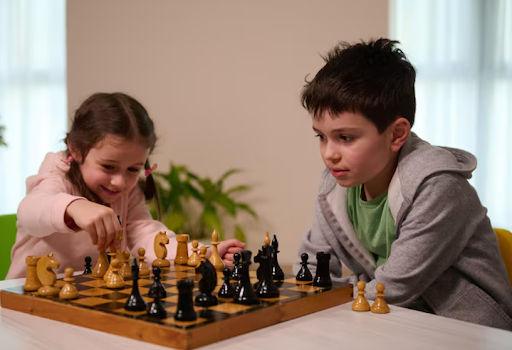
Student assessment teams reviewing tournament reports often identify a consistent trend. Learners following a structured training pathway demonstrate stronger board awareness, fewer recurring mistakes, and greater consistency during competitive play. Their development typically reflects a sequence of lessons, practice sessions, and performance reviews that build upon one another over time.
Within organized coaching environments, progress is measured through curriculum milestones rather than isolated victories. Coaches evaluate tactical accuracy, positional understanding, and decision-making patterns before introducing more advanced material. For families exploring a chess beginner course, this type of progression creates a clearer route toward meaningful improvement than unstructured learning alone.
Why Random Learning Creates Development Gaps
Many children begin their chess journey through online videos, casual games, and occasional puzzle-solving sessions. While these activities may generate interest, they often expose students to concepts without establishing a clear learning order.
As knowledge accumulates unevenly, weaknesses become more noticeable. A learner might understand tactical tricks but struggle with opening development, or recognize checkmate patterns while lacking strategic planning skills. Structured progression helps address these imbalances before they become long-term obstacles.
Building Confidence Through Sequential Learning
Every stage of chess education depends on previously acquired knowledge. Students who understand piece coordination are better prepared to study tactical themes. Those who master tactical awareness can transition more effectively into positional planning.
Gradual progression also improves confidence. Children experience success more frequently when lessons match their current ability level, creating a learning environment that encourages participation and sustained engagement.
The Core Stages of Progressive Chess Development
Strong training programs divide instruction into clearly defined phases. Each stage introduces new concepts while reinforcing previous lessons, allowing students to build knowledge without becoming overwhelmed.
This educational model creates continuity across the learning process. Instead of jumping between unrelated topics, learners move through a pathway that supports steady development and measurable improvement.
Learning Rules and Piece Coordination
The foundation stage focuses on board orientation, notation, legal moves, and basic checkmate patterns. Students become comfortable with the mechanics of the game while developing familiarity with common positions.
During this phase, coaches also introduce simple exercises that improve observation skills and encourage thoughtful move selection.
Understanding Opening Principles
Opening instruction emphasizes development, king safety, and control of important squares. Rather than memorizing lengthy variations, learners focus on concepts that remain relevant across many different positions.
This approach helps students create stable positions from the beginning of each game while avoiding common beginner mistakes.
Developing Tactical Recognition
Tactical awareness forms a significant part of chess improvement. Students learn how to identify forks, pins, skewers, discovered attacks, and double threats through guided exercises and game analysis.
Repeated exposure to these patterns improves calculation accuracy and encourages deeper evaluation before committing to a move.
Strengthening Endgame Knowledge
Many competitive games reach simplified positions where technical understanding becomes essential. Endgame instruction teaches students how to convert advantages and defend challenging situations with greater confidence.
As a result, learners develop a stronger appreciation for pawn structure, king activity, and piece placement.
Introducing Positional Thinking
Once tactical fundamentals become reliable, students begin studying strategic concepts such as space, initiative, weak squares, and long-term planning.
These ideas help players evaluate positions more accurately while developing plans based on structural advantages rather than immediate threats alone.
Building Analytical Habits
Game review sessions teach students how to identify mistakes objectively. Rather than focusing exclusively on results, learners examine decision-making processes and consider alternative approaches.
This habit encourages continuous improvement because every game contributes valuable information for future development.
Preparing for Competitive Environments
Tournament participation introduces practical challenges that cannot be replicated through casual play. Time management, concentration, and emotional control become increasingly important during competitive events.
Exposure to different opponents also broadens experience and helps students apply learned concepts under realistic conditions.
Advancing Toward Higher-Level Strategy
As students progress, they encounter deeper strategic themes and more complex planning methods. Advanced instruction builds upon earlier foundations, allowing learners to approach sophisticated positions with confidence.
Because progression has been gradual, these concepts feel like natural extensions of existing knowledge rather than entirely new challenges.
The Value of Consistent Coaching Support
Qualified instruction plays an important role throughout every stage of development. Coaches help students correct mistakes, reinforce essential concepts, and maintain productive training habits over extended periods.
Regular mentorship also provides accountability. Children often remain more engaged when lessons, assignments, and performance evaluations occur within a structured framework supported by experienced guidance.
How Modern Training Tools Improve Learning Outcomes
Digital learning platforms have expanded access to high-quality chess education. Interactive lessons, online practice environments, and analytical resources allow students to receive immediate feedback on their performance.
Programs offering a comprehensive chess course for kids frequently incorporate these tools to support individualized development. Detailed performance reports help learners identify recurring weaknesses while giving coaches valuable information for future instruction.
Key Factors Parents Should Evaluate
Selecting an educational program involves more than comparing schedules or lesson formats. Several elements influence how effectively a child develops over time.
Coaching Standards
- Experienced instructors with structured teaching methods
- Consistent feedback and progress monitoring
- Clear communication during lessons
Curriculum Design
- Defined learning levels and progression paths
- Practical exercises connected to lesson objectives
- Regular opportunities for assessment
Competitive Exposure
- Organized tournaments and training events
- Guided game review sessions
- Performance tracking systems
Programs that combine these elements often provide a stronger educational experience than isolated learning resources.
Final Thoughts
Why do some young players continue improving year after year while others struggle to move beyond the basics? The answer often lies in the structure behind their learning journey. Chessbrainz combines beginner, intermediate, advanced, and master-level pathways with FIDE-rated coaching, AI-powered analysis, weekly tournaments, and mentorship frameworks guided by Grandmaster Srinath Narayanan. For families searching for a trusted chess teacher in Mumbai, this approach delivers a progression-focused learning experience designed to help children develop stronger chess skills, greater confidence, and long-term competitive readiness.